
Many organizations are searching for an efficient and effective way to set up and structure their tax control and to ensure both internal and external oversight. The Dutch tax authorities’ (horizontal) monitoring is based on their Audit Approach (Controle Aanpak Belastingdienst; CAB), with statistical sampling constituting an essential instrument in this.
This technique is not only used for tax audits — such as payroll taxes, VAT, corporate income tax, Customs, excise duties and consumption tax — but also for assessing the quality of tax processes and internal control measures within the Tax Control Framework (TCF). It is becoming increasingly common for internal and external auditors to use this approach to carry out reliable, efficient and objective tax analyses.
Is your organization interested in an inhouse statistical sampling training session?
Then we’d be happy to organize this for you! During the training session, typically a morning or afternoon or split into two separate morning or afternoon sessions, statistical sampling theory will be explained to your employees in combination with practical examples and tips they can immediately apply.
Why statistical sampling?
Statistical sampling offers a fast, reliable, powerful and transparent method to test tax processes and to assess whether an organization is ‘in control’ of tax. It makes it possible to efficiently establish whether the internal tax control is adequately set up, actually functions effectively and provides certainty about the quality and acceptability of tax returns and control measures.
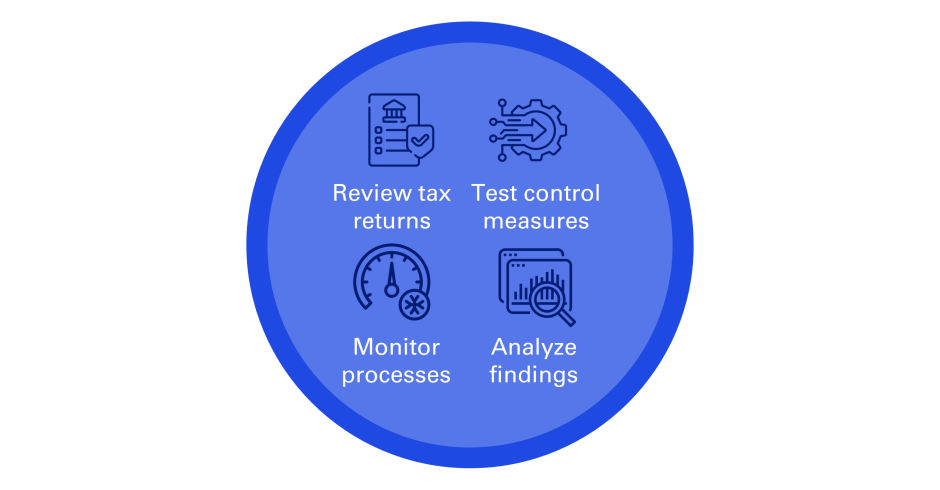
For example, statistical sampling makes it possible for you to:
- objectively review the acceptability of (aspects of) tax returns
- review the effectiveness of tax control measures
- continuously monitor tax processes
- analyze and quantify findings and clearly report this.
Looking ahead: from reactive to preventive
Statistical sampling has become an indispensable part of the current tax practice and offers organizations the possibility to pro-actively manage tax control. The Dutch tax authorities adjust the form and intensity of its horizontal monitoring to the extent of tax control within the organization.
To assess this, the Dutch tax authorities expect to be provided with insight into the setup, the existence and the operation of relevant internal tax control measures. Statistical sampling allows you to provide that insight in a structured and demonstrable manner.